The Future of AI Video: Predictions for 2026-2027
Expert analysis of where AI video generation is headed. From multi-shot narratives and real-time generation to industry disruption and creative tools, explore the trends that will define the next era of AI video.
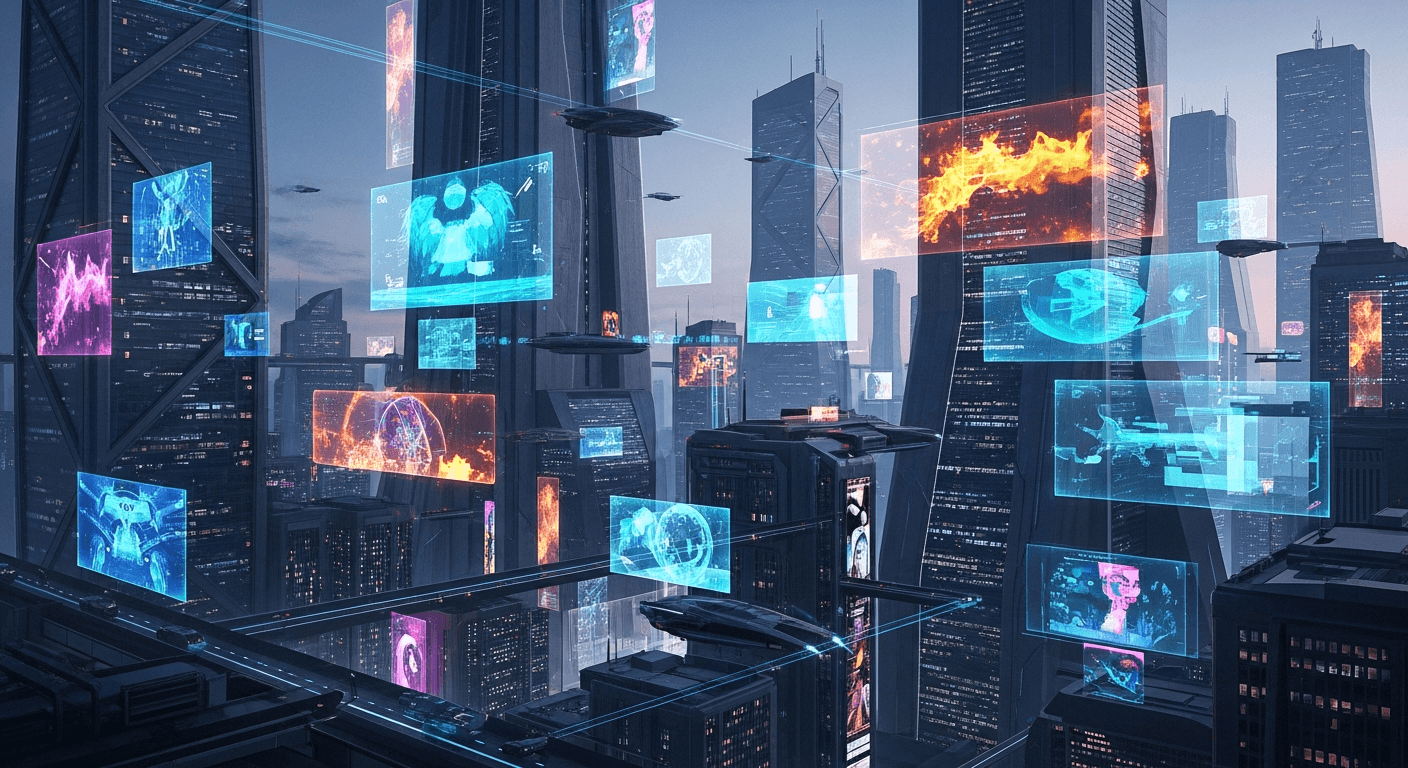
By the end of 2027, generating a feature-quality 60-second video from a prompt will cost less than a cup of coffee, and no one will blink. That is the bold prediction — and the math behind it is less speculative than it looks.
TL;DR
- Duration will break the 60-second barrier for coherent, cinema-grade AI video.
- Real-time generation will arrive for short clips, unlocking interactive and live use cases.
- Physics and motion coherence will become good enough for most commercial work.
- Personalized avatars like OmniHuman v1.5 will scale to millions of individual presenters.
- Mainstream production will adopt AI video for pre-viz, inserts, and full sequences — not as a novelty.
- The creators who benefit most are the ones building fluency now, before the playing field levels.
The Pace Problem
Let us ground the predictions in recent history. In April 2024, state-of-the-art public AI video was 4-second clips at 480p with morphing faces, no audio, and failure rates around 50%. Two years later, Seedance 2.0 produces 15-second 720p clips with synchronized audio, near-perfect identity preservation, and cinema-grade color science — for about $3.
That is roughly a 10x quality improvement, 4x duration improvement, and new capability stack (audio, text-to-video) in 24 months. Forecasting the next 18 months means asking what happens when that pace continues — or accelerates, which is more likely given current compute trends.
Here are five specific predictions and what they mean for creators working today.
Start building your AI video fluency
The gap closes fast. 50 free credits to start shipping real work before the rest of the market catches on.
Try Seedance 2.0 FreePrediction 1: Durations Break 60 Seconds
Confidence: Very High | Timeline: Late 2026 - Mid 2027
Current top-tier models cap out between 15 and 18 seconds. The next major milestone is 60 seconds of coherent output without drift.
Why it is coming
Three forces are converging:
- More efficient attention mechanisms. Current temporal attention has quadratic complexity in frame count. New architectures (sparse attention, sliding window, state-space models) reduce this to near-linear — directly enabling longer videos.
- Better training datasets. Longer clips in training data let models learn what "coherent minute" looks like. ByteDance has the largest long-form video dataset on the planet through TikTok and Douyin.
- Dedicated research pressure. Every major lab (ByteDance, OpenAI, Runway, Google) has public research on long-form video as a stated priority.
What 60 seconds unlocks
A 60-second ceiling is the threshold where AI video stops being "clip generation" and starts being "short-film generation." Entire ads, explainer videos, and music video sequences can live inside a single generation. Post-production collapses. Iteration speed multiplies.
Expect the first 30-second tier in late 2026 and the 60-second tier in early-to-mid 2027.
Prediction 2: Physics Becomes Believable
Confidence: High | Timeline: Throughout 2026-2027
Current AI video has a "close enough" relationship with physics. Water mostly flows right. Cloth mostly drapes right. Gravity is approximately obeyed. But trained eyes still spot the failures — and physics is what separates "cool clip" from "usable footage."
What is improving
- Fluid dynamics: water, smoke, and fire rendering approaching simulation-quality
- Cloth and hair: natural draping, wind response, and secondary motion
- Collisions and impacts: objects behaving like objects, not ghosts passing through each other
- Gravity consistency: subjects obeying weight across full clips, not just opening frames
By late 2027, expect AI video physics to be indistinguishable from hand-animated VFX for most creator use cases. The gap to full simulation will remain in high-end film work.
Prediction 3: Real-Time Generation Arrives
Confidence: Medium-High | Timeline: Mid 2026 - Mid 2027
Seedance 2.0 currently generates in seconds to a minute depending on settings. The target is under 2 seconds per clip — the threshold where generation becomes interactive.
The path to real-time
- Consistency models that generate in 1-4 denoising steps instead of 20-100
- Model distillation compressing large models into smaller, faster versions
- Hardware acceleration from new GPU generations (Blackwell, MI400)
- Edge inference on consumer GPUs instead of cloud round-trips
What real-time unlocks
- Live content generation during streams and presentations
- Interactive storytelling where viewers shape the video in real time
- Real-time VFX on film sets
- Conversational video — AI assistants that visualize explanations while talking
- Game cinematics generated dynamically based on player state
Once real-time generation arrives, entirely new product categories become possible. This is where the next billion-dollar AI video companies will be born.
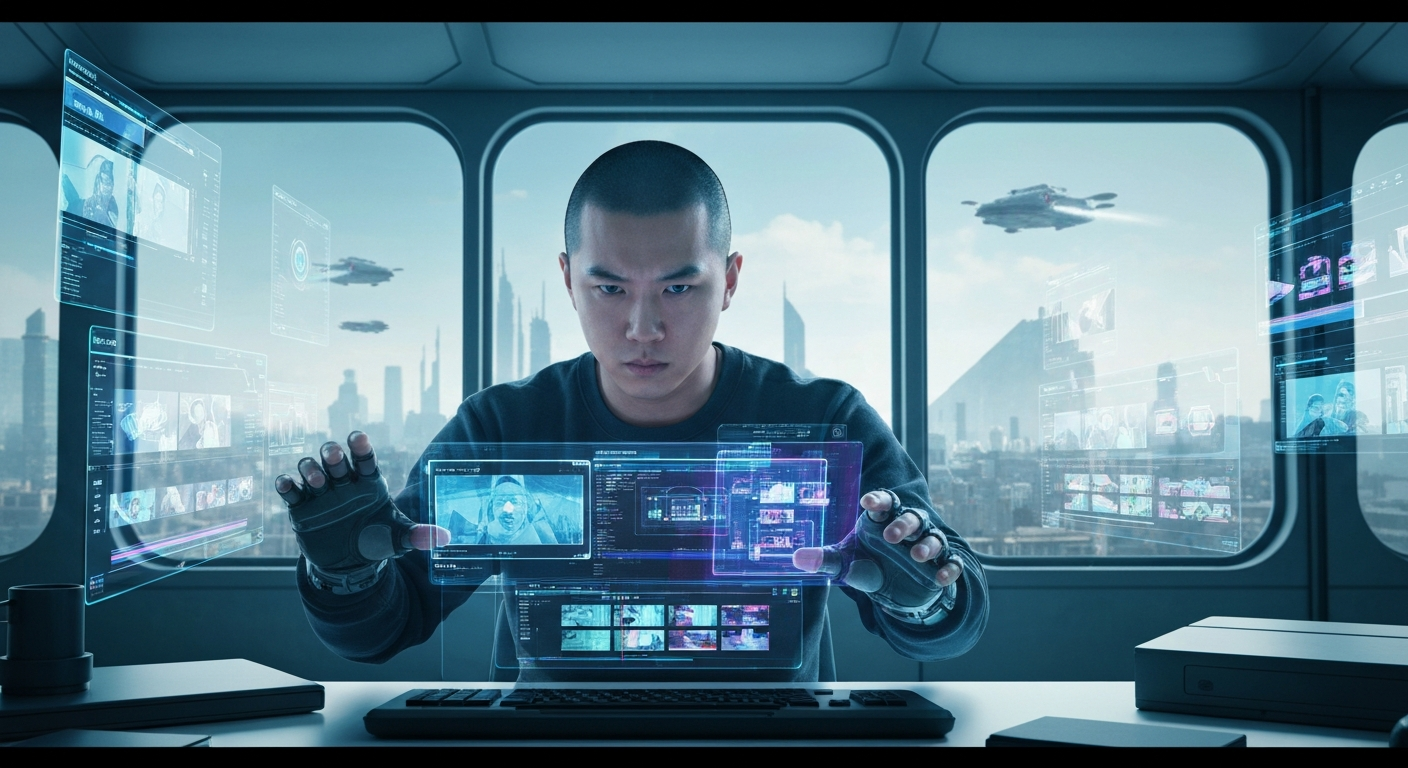
Want to ship in the era of cinema-grade AI? You're 30 seconds away from your first generation. Try Seedance 2.0 free →
Prediction 4: Personalized Avatars at Scale
Confidence: Very High | Timeline: Throughout 2026-2027
OmniHuman v1.5 already generates talking-head video from a single photo and audio file for $9.60 per clip. That cost drops to under $1 within 18 months, and the quality hits the point where average viewers cannot tell the difference from a real webcam recording.
What scales with it
- Personalized sales video: every prospect gets a video addressed to them by name
- Multilingual content: record once, release in 50 languages with matched lip sync
- Education at scale: a single instructor "teaches" millions of students in their native language
- Customer support: consistent brand representatives across thousands of FAQ videos
For the current state of the art, read our OmniHuman AI avatars guide. The economics already favor AI avatars over traditional video for any use case involving repetition, personalization, or multiple languages — and the cost gap will widen.
Prediction 5: Mainstream Production Adopts AI
Confidence: High (pre-production) / Medium (final footage) | Timeline: Throughout 2026-2027
Pre-production workflows (pre-viz, concept art, mood exploration, storyboarding) will be AI-first within 18 months. This is already happening across mid-size studios. The harder question is when AI-generated footage appears in final deliverables.
The adoption curve
- Already shipping: Independent filmmakers, music videos, commercial shorts
- Late 2026: Mid-budget commercials, inserts in larger productions, B-roll replacement
- Mid 2027: Supporting scenes in feature films, full short-form ad creative
- 2028+: Full AI scenes in mainstream productions (with human direction and editing)
The inflection point is not technical capability — it is industry comfort. Generation quality already exceeds the bar for many use cases. What is missing is the workflow integration and the cultural shift in how producers think about AI output. Both are moving fast.
For a comparison of current pro-grade tools, see the best AI video generators in 2026.
What This Means For You, Right Now
The most important question is not "what happens in 2027." It is "what should I do in 2026."
The opportunity window
Right now, AI video fluency is a genuine competitive advantage. In two years it will be table stakes — like knowing how to use Photoshop is table stakes for a designer today. The gap between "someone who generates AI video sometimes" and "someone who can reliably ship high-quality AI video" is enormous, and it is the window where individual creators can outperform well-funded teams.
Three things to do this month:
1. Build an actual portfolio. Not experiments — finished clips that solve real problems. Ads, explainers, social content, whatever matches your goals. Five finished pieces teach more than fifty abandoned tests.
2. Master prompting and reference workflows. The gap between mediocre and great AI video is mostly prompt craft and image-first pipelines. Read our Seedream image generation guide and learn the two-stage workflow.
3. Learn what "good" looks like. Watch the best AI content being shipped. Study the production values. Understand color, composition, and motion — the fundamentals that translate across all media.
Skills that gain value
- Creative direction and prompting — translating vision into effective prompts
- Editing and post-production — assembling AI pieces into finished work
- Storytelling — the fundamental human skill that becomes scarce relative to production capacity
- Quality judgment — knowing which of 20 generations to ship
Skills that lose value
- Routine camera work and generic B-roll capture
- Template-driven content creation
- Stock footage sourcing
- Basic motion graphics
The competitive reality
For the next 12 to 18 months, the creators who win are the ones treating AI video as a professional discipline — something worth learning seriously, not a toy. After that, the tools get so good and so cheap that the entire market normalizes. Everyone has access. The winners are the ones who built their craft while access still meant something.
The Cost Trajectory
One more number to internalize. Here is the cost-per-impressive-clip trajectory:
| Year | Cost per ~10s Clip | Relative | |---|---|---| | 2023 | $50-$200 | 100x | | 2024 | $5-$20 | 10x | | 2025 | $1-$5 | 2x | | 2026 | $2.43-$9.10 (Seedance 2.0) | 1x | | 2027 (projected) | $0.10-$1.00 | 0.3x |
Within 18 months, generating a high-quality AI video clip will cost less than sending a premium text message. Every email could have a custom video. Every product listing, every ad, every lesson, every announcement. The floor drops out.
For creators, this is not a threat — it is a leverage multiplier, but only for the ones who built the craft early.
Build your portfolio before the market normalizes
The learning curve is the moat. 50 free credits to start compounding your fluency this afternoon.
Generate My First ClipHow to Position Yourself
If you take one thing from this post, make it this: the best time to start shipping real AI video is this week. Not because the tools are perfect (they are not), but because the learning curve is the actual moat. Two years of iteration on Seedance will put you ahead of 95% of the market when everyone else piles in.
Start with 50 free credits on signup. Read the complete Seedance 2.0 guide. Study the Seed model family to understand the full workflow. Ship five finished pieces before you worry about the next tool.
The future of AI video is already in your hands. The only question is whether you start building with it now or after the window closes.
Ready to start building your AI video portfolio? Create your first clip free with Seedance 2.0 → — 50 credits on signup, no subscription required.