AI Image Compositing with Seedream v4.5 Edit
Combine multiple images into seamless composites with Seedream v4.5 Edit. Learn the prompt patterns, layering logic, and lighting tricks that turn 10 inputs into a single hero shot.
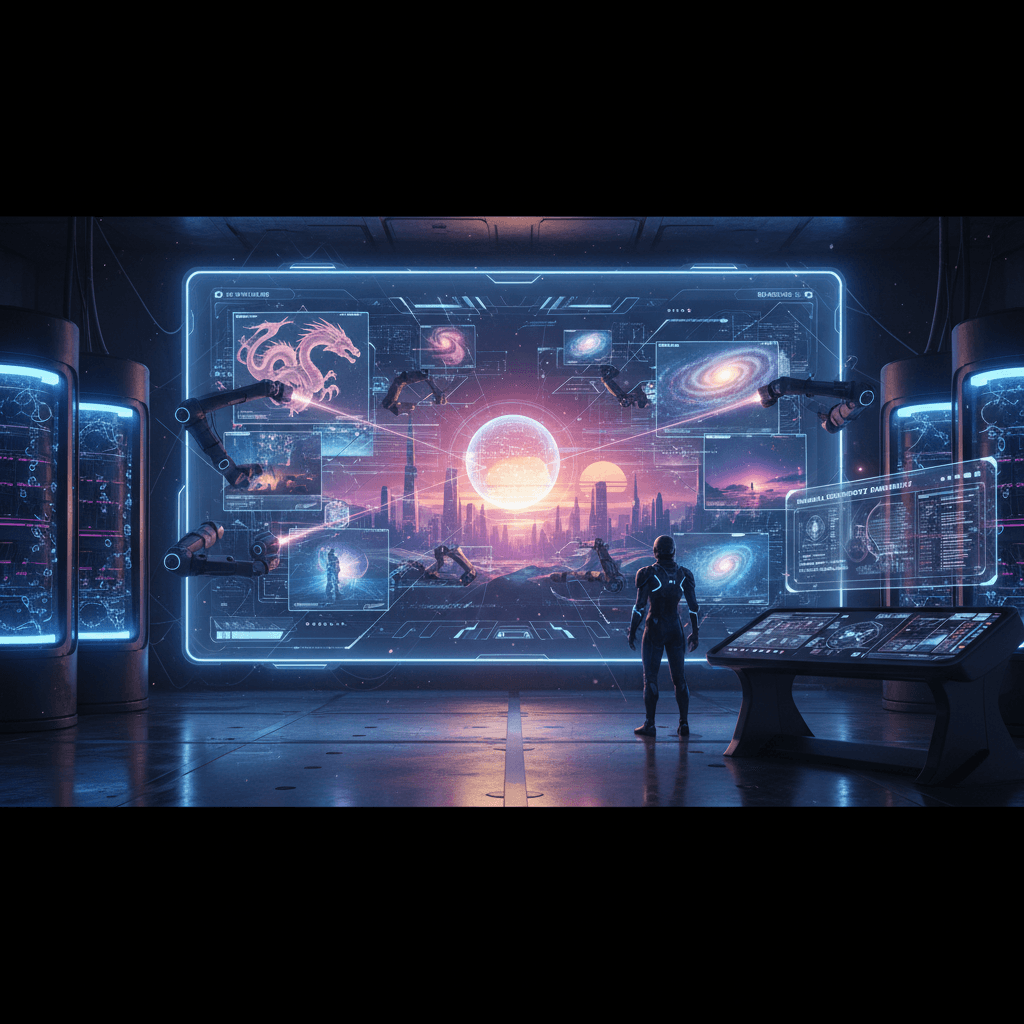
Compositing used to require mastery of layer masks, blending modes, and enough patience to match shadows by eye. Seedream v4.5 Edit collapses it into a sentence. Give the model up to 10 reference images, describe the composite, and it returns a 4MP hero image with lighting, perspective, and shadows resolved in one shot. This tutorial walks through the exact mechanics.
TL;DR
- Seedream v4.5 Edit handles up to 10 reference images in a single composite
- Describe each image's role explicitly ("subject from image 1, background from image 2")
- Match lighting across references or pick one as the anchor
- 8 credits and 30–60 seconds for a full composite at 4MP
- Works for product, lifestyle, fashion, real estate, and editorial scenes
What Compositing Means in v4.5
Traditional compositing is manual: cut out subject, paste onto background, adjust color and shadow, blend edges. You do the work of making the combination look believable.
In v4.5, you describe the composite and the model handles matching. Where Photoshop asks "select the region and the fill content," v4.5 asks "describe the scene and I will assemble it."
That does not mean the tool is magic. Well-directed prompts produce great results; vague prompts produce muddy ones. The rest of this tutorial is about directing the model well.
The Four Types of Composites
Most composites fall into one of four patterns. Knowing which pattern you are building tells you how to structure your prompt.
1. Subject + Background
One subject placed into a new environment. Most common composite type.
2. Multi-Subject Scene
Two or more subjects combined into a shared scene — fashion editorials, group shots, product trios.
3. Element Assembly
Building a scene from multiple discrete elements — a table with food, a desk with tools, a flat lay.
4. Style-Driven Composite
A composite where a mood or style reference drives the overall look more than any single element.
Try Seedream v4.5 Edit — high-res AI editing
4MP output, up to 10 input images, $0.08 per edit. 50 free credits, no card.
Try Seedream v4.5 Edit FreeThe Universal Composite Prompt Template
Take [subject description] from image 1 and place it [position]
in the environment from image 2. Match the lighting direction and
color temperature from [lighting reference image]. Preserve
[what must not change]. Add [supporting details like shadows or
reflections]. Output at 2048x2048.
Fill in the blanks and you have a working prompt for nearly any composite.
Worked Example 1: Subject + Background
Inputs:
- Image 1: Model in a studio wearing a navy coat
- Image 2: A cobblestone street in Paris at dusk
Prompt:
Place the model from image 1 onto the cobblestone street in image 2.
Position her in the center of the frame, walking toward camera.
Match the cool blue-hour lighting from image 2 with soft directional
light from camera-left. Preserve the model's pose, coat, and facial
expression. Add a soft reflection on the wet cobblestones. Output at
2048x2048.
Result: A 4MP editorial composite in 40–50 seconds. 8 credits.
Worked Example 2: Element Assembly
Inputs:
- Image 1: A clean wooden table surface
- Image 2: A cup of espresso
- Image 3: A croissant on a plate
- Image 4: A notebook and pen
- Image 5: A morning light reference (soft window light)
Prompt:
Build a cafe flat lay on the wooden table from image 1. Place the
espresso from image 2 in the center-left, the croissant from image 3
in the center-right, and the notebook with pen from image 4 in the
bottom-right. Match the soft morning window light from image 5 — cool
temperature, directional from camera-top-left. Add realistic cast
shadows under each object. Output a top-down cafe flat lay at 2048x2048.
Result: A five-element composite with consistent lighting and shadows. Still 8 credits, still under a minute.
Build your first composite now. Open Seedream v4.5 Edit.
Worked Example 3: Style-Driven
Inputs:
- Image 1: Plain portrait photo of a person
- Image 2: A vintage film photograph with warm tones and grain
Prompt:
Apply the color grading, contrast, and film grain aesthetic from
image 2 to the portrait in image 1. Preserve the subject's face,
pose, and clothing structure exactly. Do not change the background
composition. Output at 2048x2048.
Result: A style-transferred portrait that reads as one coherent editorial image. Power users lean on this pattern to lock brand aesthetic across a whole campaign.
Lighting: The Hardest Part of Compositing
Lighting mismatch is the #1 reason composites feel fake. Two fixes:
1. Pick a lighting anchor and state it explicitly. Choose one image (usually the background or a dedicated lighting reference) and tell the model to match it. "Match the warm afternoon lighting direction from image 2" works better than "make the lighting nice."
2. Describe direction and temperature. "Soft directional light from camera-left, warm golden hour temperature" gives the model specific targets. "Good lighting" gives it nothing.
If you can name the lighting, the model can match it.
Perspective: The Second Hardest Part
v4.5 is generally good at perspective matching, but it helps to:
- Use reference images with similar camera angles when possible
- Call out perspective explicitly: "viewed from eye level, slight 3/4 angle"
- Avoid combining extreme wide-angle with telephoto references in the same composite
Perspective mistakes usually show up as objects that look slightly "pasted" into a scene. If that happens, add "match the camera angle and perspective from image 2" to your prompt.
Composite at 4MP in under a minute
Up to 10 references per request. 8 credits per output. 50 free credits on signup.
Open Seedream v4.5 EditTroubleshooting Common Issues
Problem: Subject looks pasted in. Fix: Explicitly match lighting and add contact shadows in the prompt.
Problem: Color temperature feels off. Fix: Pick one image as the color anchor and reference it: "Match the warm color temperature from image 3."
Problem: Model ignored one of my reference images. Fix: Name it explicitly in the prompt ("using the texture from image 4"). Unnamed references get deprioritized.
Problem: Composite looks over-stylized. Fix: Remove any style references and rely only on the base images. Style references can dominate a prompt.
Problem: Details drift between iterations. Fix: Add "preserve X, Y, Z exactly" for the critical elements. Without that, the model may reinterpret.
Pro Patterns
- Anchor + variants: Lock your prompt template with 3 inputs, then swap one reference to generate variants quickly.
- Progressive compositing: For very complex scenes, do it in two passes — composite half the scene first, then feed the result back as an input.
- Style locking: Keep a 2–3 image "brand mood" reference set and include it in every composite for visual consistency.
Next Steps
Compositing is where Seedream v4.5 stops feeling like a filter and starts feeling like a digital art director. Once you are comfortable with multi-image prompts, the whole catalog of production work opens up.
Read the multi-image editing guide for deeper context on input ordering, the product photography walkthrough for commercial examples, or the complete v4.5 Edit guide for the full model overview.
When you are ready, /create/seedream-v4-5-edit has the tool waiting. Your 50 free credits are enough for 6 full composites.